Cookie Privacy Preferences
We utilise essential cookies to ensure our website operates effectively and remains secure. Additionally, we'd like to request your permission to use optional cookies. These are intended to enhance your browsing experience by offering personalised content, displaying advertisements that are relevant to you, and helping us to further refine our website.
Choose "Accept all cookies" to agree to the use of both essential and optional cookies. Alternatively, select "Let me see" to customise your preferences.
Privacy Preference Centre
Our website utilizes cookies to enhance your browsing experience and to present you with content tailored to your preferences on this device and browser. Below, you will find detailed information about the function of cookies, enabling you to make informed choices about which cookies you wish to accept. Please note that disabling certain cookies might impact your user experience on our site. It's important to remember that cookie preferences need to be set individually for each device and browser you use. Clearing your browser's cache may also remove your cookie settings. You have the freedom to modify your cookie preferences at any point in the future.
For a comprehensive understanding of our use of cookies, please refer to our complete cookies policy.
These cookies are needed for the website to work and for us to fulfil our contractual obligations. This means they can't be switched off. They enable essential functionality such as security, accessibility and live chat support. They also help us to detect and prevent fraud. You can set your browser to block or alert you about these cookies, but it means some parts of the site won't work.
These cookies allow us to measure and improve the performance of our site. They help us to know how popular pages are, and to see how visitors move around the site. If you don't allow these cookies, we won't know when you've visited our site, and we won't be able to monitor its performance.
These cookies enable us to provide enhanced functionality and personalisation. They may be set by us or by third party providers whose services we've added to our pages. If you don't allow these cookies, some or all of these services may not work properly.
These cookies collect information about your browsing habits to show you personalised adverts. They may be used to build a profile of your interests and show you relevant adverts on other sites. They don't store directly personal information, but are based on uniquely identifying your browser and internet device. If you don't allow these cookies, the adverts you see will be less relevant.
VIEW ALL
Paulaner
Stiegl
Lervig
Augustiner Brau
VIEW ALL
United Kingdom
Germany
Belgium
America
VIEW ALL
Mobile Version
Free Shipping on orders over £60
Spend another £60 to qualify
VIEW ALL
Paulner
Stiegl
Lervig
Augustiner Brau
Hacker-Pschorr
Omnipollo
Delirium
Tegernseer
De Halve Maan
Lindemans
VIEW ALL
United Kingdom
Germany
Belgium
America
VIEW ALL
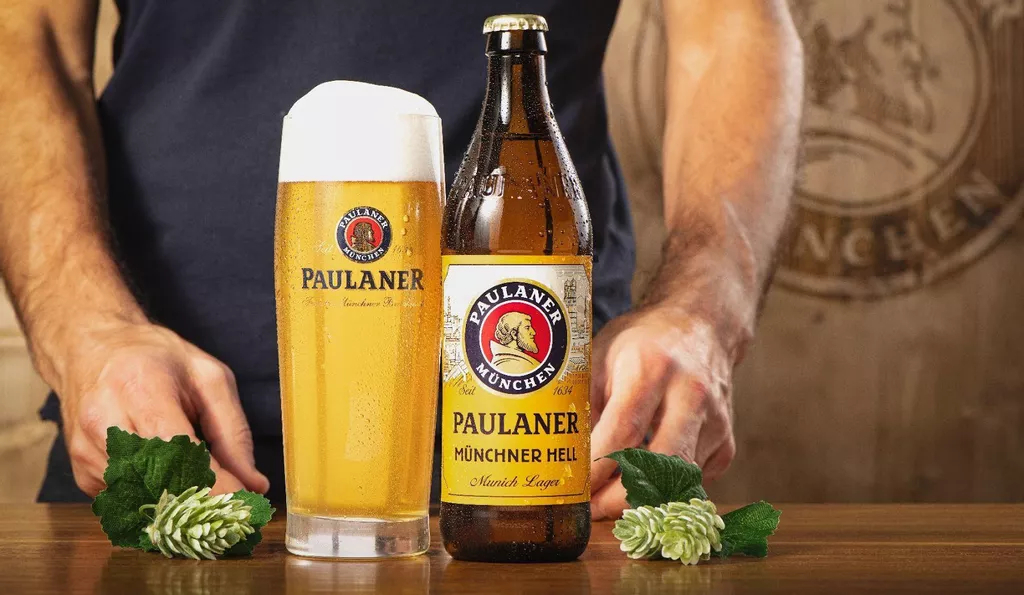
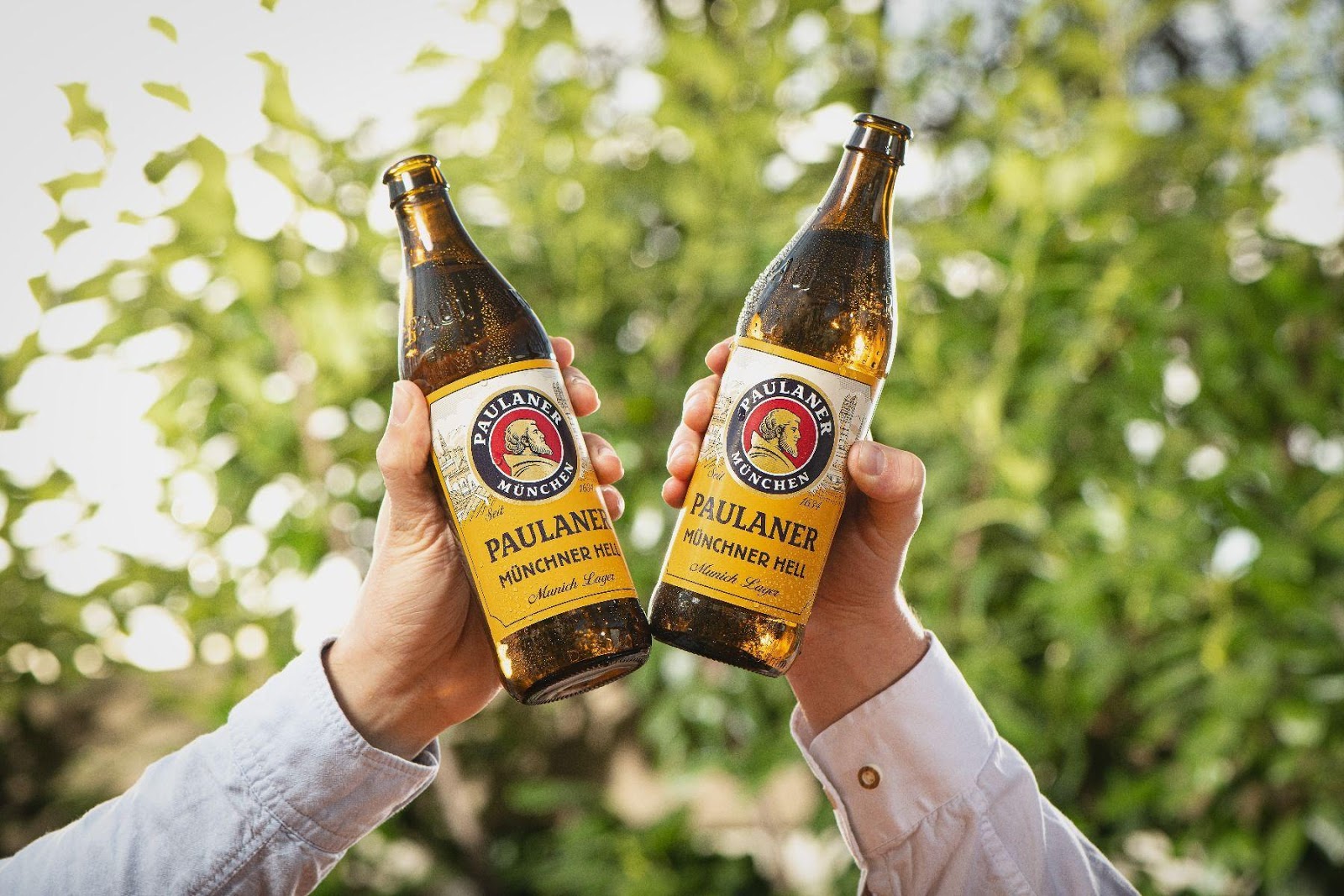
The Paulaner Brewing Journey. Every Paulaner beer is still brewed exclusively in the hometown of Munich strictly according to the Bavarian Beer Purity Law. Visitors to Germany soon become aware of the lack of availability of foreign beers. In its very largest cities, one might come across a lonely Guinness tap among the pilsners, helles, weissbiers, kellerbiers and bocks, but Germans are as loyal to their domestic brews as they are to their BMWs, Audis and Mercedes.
The beer making process is both a science and an artform and has been the specialty of Munich-based brewery Paulaner for many years. Malt is added to the Mash Tun and left to steep in hot water, producing a sugary liquid called wort. This is a process called “mashing-in”. The malt is then steeped in hot, but not boiling, water for approximately an hour. This activates enzymes in the malt that causes starch in the malt to break down and release simple sugars. Once this is all done you drain the water from the mash which is now full of sugar from the grains. This sticky, sweet liquid is called wort – which is actually pronounced ‘wurt’.The wort is transferred into a Copper where hops are added for bitterness. The wort is boiled for about an hour, after which more hops are added for aroma.
Once the wort is cooled, it’s put into a fermentation vessel where yeast is added to it. This is where the magic happens – the yeast eats the sugar, creating carbon dioxide and alcohol. The length of the fermentation process is determined by the variety of beer being produced. After the fermentation process is complete, alcoholic beer has been produced.
The beer can then be put into a cask, which is one of the least processed types of beer, or it can be put into kegs, bottles, or cans, which requires processing and may also require carbonation, depending on what style of beer has been made. Unfiltered beer is often thought of as being more ‘craft’ because it keeps more of its flavour, which can be affected during processing and filtering. There is a fine balance between not heavily processing beer while ensuring it is clean. The beer will taste even better now that you know what goes into making it!